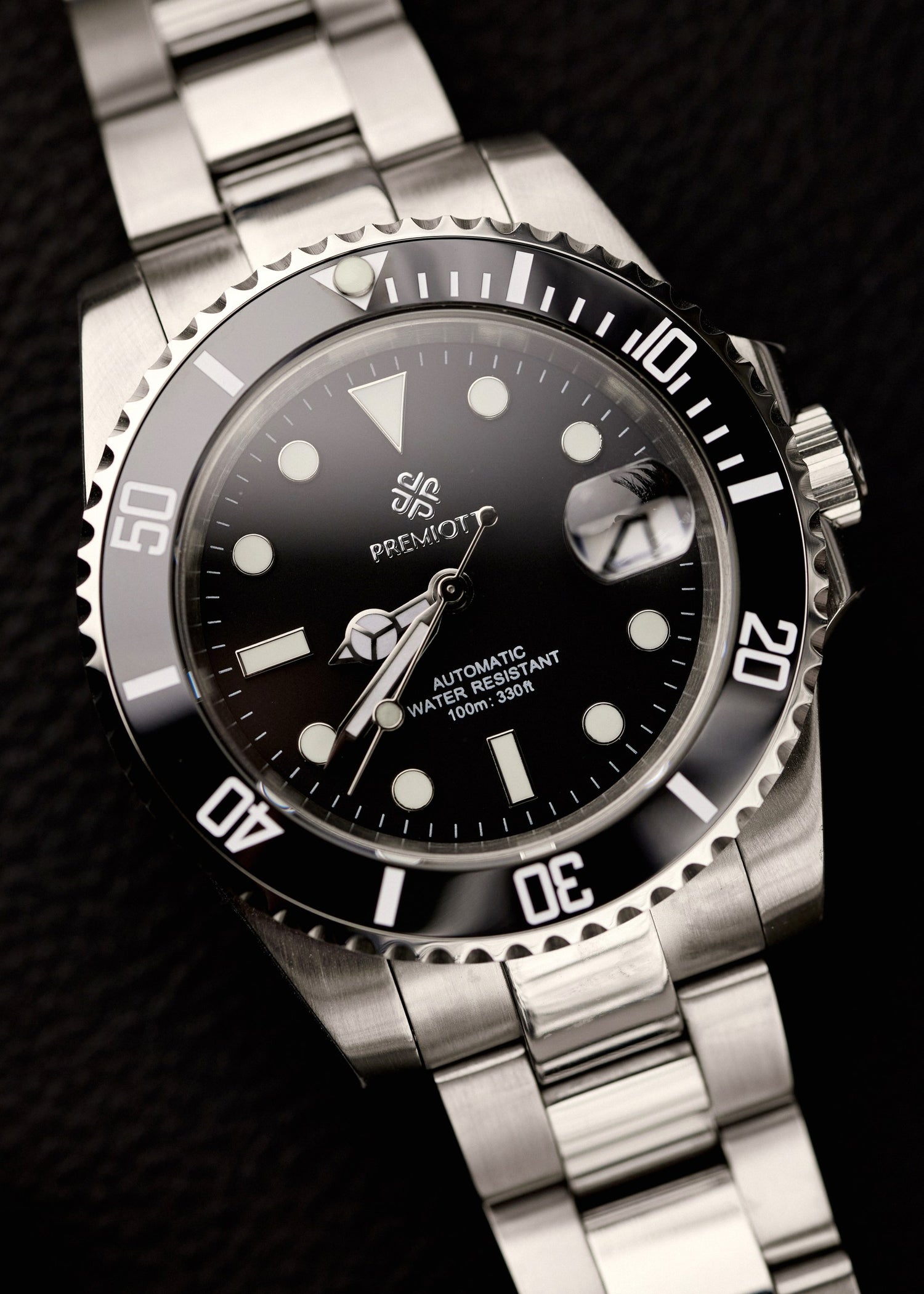

Automatic vs. quartz: ce diferență contează cu adevărat
Este una dintre primele întrebări pe care și le pune oricine se apropie de un ceas mecanic: automatic sau quartz? Răspunsul scurt este că niciunul nu e „mai bun" în absolut — sunt două filosofii diferite despre ce înseamnă un ceas bun. Quartz-ul câștigă detașat la precizie și la lipsa grijilor. Automaticul câștigă la farmec, la longevitate și la povestea din spatele mecanismului. Mai jos explicăm cum funcționează fiecare, unde sunt diferențele reale și de ce, la Premiott, am ales să lucrăm exclusiv cu mecanisme automatice.
Cum funcționează un ceas cu quartz
Un ceas quartz are la bază o baterie și un cristal de cuarț. Bateria trimite curent electric prin cristal, care vibrează la o frecvență extrem de stabilă — de obicei 32.768 de vibrații pe secundă. Un circuit electronic numără aceste vibrații și transformă rezultatul în mișcarea secundarului, o dată pe secundă. Este o soluție elegantă tocmai prin simplitate: puține piese, tehnologie matură, cost de producție redus.
Rezultatul practic: un ceas quartz obișnuit rămâne exact la câteva secunde pe lună, nu are nevoie de reglaj, de întors sau de purtare zilnică pentru a merge corect, iar singura întreținere reală este schimbarea bateriei, la câțiva ani.
Cum funcționează un ceas automatic
Un ceas automatic (numit și „self-winding") nu are baterie. În interior, o rotoare metalică se mișcă liber de fiecare dată când mâna se mișcă și încarcă, prin acest mecanism, un arc principal. Arcul eliberează energia treptat, printr-un sistem de roți dințate și un mecanism de escapament care „taie" timpul în impulsuri regulate — de aici mișcarea specifică, ușor tremurată, a secundarului, foarte diferită de „ticăitul" sacadat al unui quartz.
Energia acumulată în arc se numește rezervă de mers — timpul cât ceasul continuă să funcționeze după ce a fost scos de pe mână. La mecanismul Seiko NH35, folosit pe toate modelele Premiott, rezerva de mers este de aproximativ 41 de ore. Practic, dacă îl scoți vineri seară, îl mai găsești în mișcare sâmbătă la prânz.
NH35 are și două funcții utile la reglaj: hacking (secundarul se oprește când tragi coroana, ca să poți seta ora exactă) și hand-winding (poți întoarce manual coroana pentru a încărca arcul, util dacă ceasul a stat nepurtat mai multe zile, în loc să aștepți să se încarce singur prin mișcare).
Precizie: unde câștigă clar quartz-ul
Aici nu are rost să înfrumusețăm lucrurile: quartz-ul este obiectiv mai precis. Un ceas cu cuarț obișnuit deviază cu câteva secunde pe lună. Un ceas mecanic automatic bun, precum cele echipate cu NH35, deviază cu câteva secunde pe zi — undeva între -20 și +40 de secunde, în funcție de poziție, temperatură și cât de constant este purtat. Diferența e de ordinul a 100:1 în favoarea quartz-ului.
Pentru cineva care vrea o oră mereu exactă, fără să se gândească vreodată la asta, quartz-ul rămâne alegerea rațională. Nu spunem altceva clienților noștri — un ceas automatic nu se cumpără pentru precizie de cronometru, ci pentru altceva.
Întreținere: routine diferite, nu un „mai bun" absolut
Un quartz cere aproape nimic: schimbi bateria din câțiva în câțiva ani și atât. Un automatic cere puțin mai multă atenție, dar nimic complicat:
- Purtare regulată — dacă îl porți zilnic, rotoarea îl încarcă singur și nu trebuie să te gândești la nimic.
- Reglaj ocazional — dacă rămâne nepurtat câteva zile, se oprește și trebuie repornit și reglat la oră.
- Service periodic — un mecanism mecanic beneficiază, la câțiva ani, de o verificare și eventual o ungere, la fel ca orice piesă cu componente mobile.
Avantajul unui mecanism cunoscut și răspândit precum NH35 este că poate fi reparat și verificat de aproape orice ceasornicar, oriunde în lume — nu depinzi de un singur atelier sau de piese greu de găsit. Este exact motivul pentru care oferim 24 de luni de garanție pe fiecare ceas asamblat în atelierul nostru din Cluj-Napoca.
Farmecul mecanic: de ce alegem totuși automatic
Dacă precizia și confortul ar fi singurele criterii, discuția s-ar închide în favoarea quartz-ului. Dar un ceas automatic oferă ceva ce niciun cip nu poate replica: e o mașinărie mecanică în miniatură, care funcționează exclusiv din energia mișcării tale. Nu are baterie de schimbat, nu depinde de electronică și, printr-un caseback din sticlă safir — ca la toate modelele noastre — poți vedea rotoarea în mișcare de fiecare dată când îți privești încheietura.
E o diferență de experiență, nu de utilitate pură: un automatic „trăiește" cât timp îl porți, are o legătură fizică directă cu tine, iar micile lui imperfecții de reglaj fac parte din farmec, nu sunt un defect de ascuns.
Preț: unde se situează fiecare
La nivel de producție de masă, un mecanism quartz este, în general, mai ieftin de fabricat decât unul automatic — de aceea majoritatea ceasurilor foarte accesibile de pe piață sunt cu quartz. Un mecanism automatic precum NH35 are mai multe componente, cere asamblare și reglaj manual, iar acest lucru se reflectă în preț. Diferența nu înseamnă însă „calitate mai bună" în sens absolut — înseamnă altă categorie de produs, cu altă poveste tehnică din spate.
Cui i se potrivește fiecare
Un ceas quartz are sens dacă vrei oră mereu exactă, întreținere minimă și nu te interesează mecanismul din spatele cadranului — un instrument fiabil, fără poveste tehnică atașată.
Un ceas automatic are sens dacă îți place ideea unei mașinării mecanice purtate zilnic, accepți o toleranță de câteva secunde pe zi în schimbul unei experiențe mai bogate și vrei un obiect care se poate repara și purta ani, chiar decenii, în loc să fie înlocuit.
De ce Premiott lucrează exclusiv cu Seiko NH35
Am ales Seiko NH35 pentru toate modelele noastre — The Mariner, The Just Date, The Heritage și The LadyJust — dintr-un motiv simplu: este un mecanism robust, ușor de întreținut și reparabil practic oriunde, nu cel mai „precis" de pe piață. Nu pretindem altceva. Fiecare ceas are sticlă safir pe cadran și pe caseback, se asamblează și se reglează manual în atelierul nostru din Cluj-Napoca și pleacă de la noi cu 24 de luni de garanție. Poți citi mai multe despre filosofia din spatele atelierului pe pagina atelierului din Cluj-Napoca sau despre scena ceasurilor asamblate în România în ghidul ceasuri românești.
Dacă vrei un plus de personalizare, fiecare model poate primi o gravură personalizată pe capac — un mesaj de până la 10 caractere, cu diacritice românești incluse.
Întrebări frecvente despre automatic vs. quartz
Un ceas automatic „rămâne în urmă" dacă nu-l port câteva zile?
Da, dacă rezerva de mers se epuizează, ceasul se oprește pur și simplu — nu rămâne în urmă, ci stă pe loc, exact acolo unde a rămas fără energie. La NH35, ai la dispoziție aproximativ 41 de ore după ultima purtare. Când îl reiei, îl repornești și îl reglezi la oră în câteva secunde, folosind funcția de hacking.
Merită un ceas automatic dacă nu sunt pasionat de ceasuri?
Merită dacă îți place ideea unui obiect mecanic purtat zilnic, nu doar a unui instrument care spune ora. Nu trebuie să fii colecționar ca să apreciezi diferența — mulți dintre clienții noștri primesc sau aleg primul lor automatic tocmai ca ceas de purtat zilnic, nu ca piesă de vitrină.
Se poate repara un Seiko NH35 oriunde?
În mare parte, da. Este unul dintre cele mai răspândite mecanisme automate din lume, folosit de zeci de branduri independente, așa că piesele și expertiza pentru el sunt ușor de găsit la orice ceasornicar serios, nu doar în atelierul care l-a asamblat inițial.
Concluzie
Nu există un răspuns universal valabil — există doar ce contează mai mult pentru tine. Dacă vrei precizie fără compromis și zero grijă, quartz-ul câștigă clar. Dacă vrei un ceas cu suflet mecanic, pe care să-l porți, să-l îngrijești și, eventual, să-l transmiți mai departe, un automatic precum cele cu NH35 merită diferența. Poți compara direct modelele și configurațiile disponibile în configurator și poți alege silueta care ți se potrivește.