
Ceasuri românești: de la Orex la noile ateliere
Dacă ai căutat vreodată „ceasuri românești", probabil ai găsit două lucruri: articole de istorie despre ceasurile Orex din perioada comunistă și liste de branduri care nu mai există de decenii. Între cele două rămâne o întrebare la care puțini răspund direct: ce înseamnă, de fapt, un ceas românesc astăzi? Nu mai există o fabrică națională de ceasuri — dar există o scenă nouă, formată din ateliere mici și branduri independente care proiectează, asamblează și reglează ceasuri aici, în România. Ghidul de față îți spune de unde vine povestea, cum arată piața acum și la ce merită să te uiți când alegi un ceas asamblat în România.
Scurtă istorie: Orex și epoca fabricii de la Arad
Capitolul industrial al ceasornicăriei românești este legat de Arad, unde, începând cu anii 1960, s-au produs ceasurile Orex — ceasuri mecanice de serie, purtate de sute de mii de români. Erau ceasuri simple și robuste, gândite pentru uz zilnic, nu pentru vitrine de colecție; astăzi, exact această modestie le face căutate printre colecționarii de ceasuri românești vechi.
După 1989, producția a intrat în declin și s-a stins treptat, ca mare parte din industria ușoară românească. De atunci, România nu a mai avut o fabrică de ceasuri în sensul clasic — iar cuvântul „românesc", aplicat unui ceas, a trebuit să-și găsească un sens nou.
Ce înseamnă „ceas românesc" în ziua de azi
Aici e nevoie de o doză de onestitate pe care industria ceasurilor nu o oferă întotdeauna. În 2026, aproape niciun ceas din lume nu este produs integral într-o singură țară. Chiar și ceasurile elvețiene folosesc componente din mai multe surse; eticheta „Swiss Made" cere ca o parte din valoare și asamblarea finală să fie elvețiene, nu ca fiecare piesă să fie făcută în Elveția.
La fel stau lucrurile și la noi. Un „ceas românesc" contemporan este, în practică, un ceas proiectat, configurat, asamblat, reglat și verificat în România, pe baza unor componente aduse de la producători specializați — cel mai des mecanisme japoneze sau elvețiene, carcase din oțel inoxidabil și sticlă safir. Scena locală s-a diversificat în ultimii ani: există câteva ateliere mici și branduri independente românești, fiecare cu propriul unghi — unele mizează pe design inspirat de motive locale, altele pe serii limitate, altele, ca noi, pe personalizare la comandă. E o scenă mică, dar vie, și merită explorată.
Concluzia practică pentru tine, cumpărătorul: nu căuta eticheta imposibilă „100% fabricat în România". Caută în schimb un atelier care îți spune deschis ce face aici și ce componente folosește — pentru că transparența asta e cel mai bun indicator al seriozității.
La ce să te uiți când alegi un ceas asamblat în România
Criteriile de mai jos sunt aceleași pe care le-am aplica oricărui ceas, indiferent de origine — doar că, la un atelier local, ai avantajul că poți pune întrebări direct și primești răspunsuri de la oamenii care chiar au montat ceasul.
1. Mecanismul — inima ceasului
Mecanismul decide cum se comportă ceasul în timp. Un atelier serios îți spune exact ce mecanism folosește, nu se ascunde după formulări vagi. La Premiott, de exemplu, toate modelele funcționează cu Seiko NH35 — un calibru automatic japonez cu reputație solidă: fiabil, ușor de întreținut și reparabil oriunde în lume, pentru că orice ceasornicar îl cunoaște. Pentru un ceas purtat zilnic, asta contează mai mult decât orice denumire exotică.
2. Sticla — safir, nu mineral
Sticla safir este standardul la care merită să nu faci compromisuri: este mult mai rezistentă la zgârieturi decât sticla minerală, iar diferența se vede după primul an de purtare. Verifică dacă safirul este prezent și pe capacul transparent, dacă ceasul are unul — modelele noastre au safir atât pe cadran, cât și pe caseback, ca mecanismul să rămână vizibil și protejat.
3. Garanția și serviceul
Un ceas mecanic e un obiect care trăiește ani sau decenii, așa că întreabă întotdeauna de garanție și de cine îl repară dacă e nevoie. Un atelier local are aici un avantaj natural: ceasul se întoarce exact la oamenii care l-au asamblat. Premiott oferă 24 de luni de garanție pentru fiecare ceas, iar orice intervenție se face în atelierul din Cluj-Napoca.
4. Transparența privind originea
Ferește-te de formulări care sugerează mai mult decât spun: „design românesc" nu înseamnă asamblare în România, iar „brand românesc" poate însemna doar un birou de comenzi. Întreabă direct: unde se asamblează ceasul? cine îl reglează? ce componente folosiți? Un atelier onest răspunde fără ezitare — noi am scris totul negru pe alb pe pagina despre atelierul nostru din Cluj.
5. Personalizarea — avantajul real al unui atelier mic
Aici atelierele românești pot oferi ceva ce fabricile mari nu pot: un ceas configurat pentru tine, nu scos de pe raft. Pentru că ceasul se asamblează la comandă, poți alege cadranul, luneta și brățara, iar rezultatul e o piesă pe care nu o mai poartă nimeni la fel. La Premiott poți adăuga și o gravură pe capac — un mesaj de până la 10 caractere, cu diacritice românești incluse. Cum funcționează tot procesul, pas cu pas, găsești pe pagina de personalizare.
Cum lucrăm noi: un atelier din Cluj-Napoca
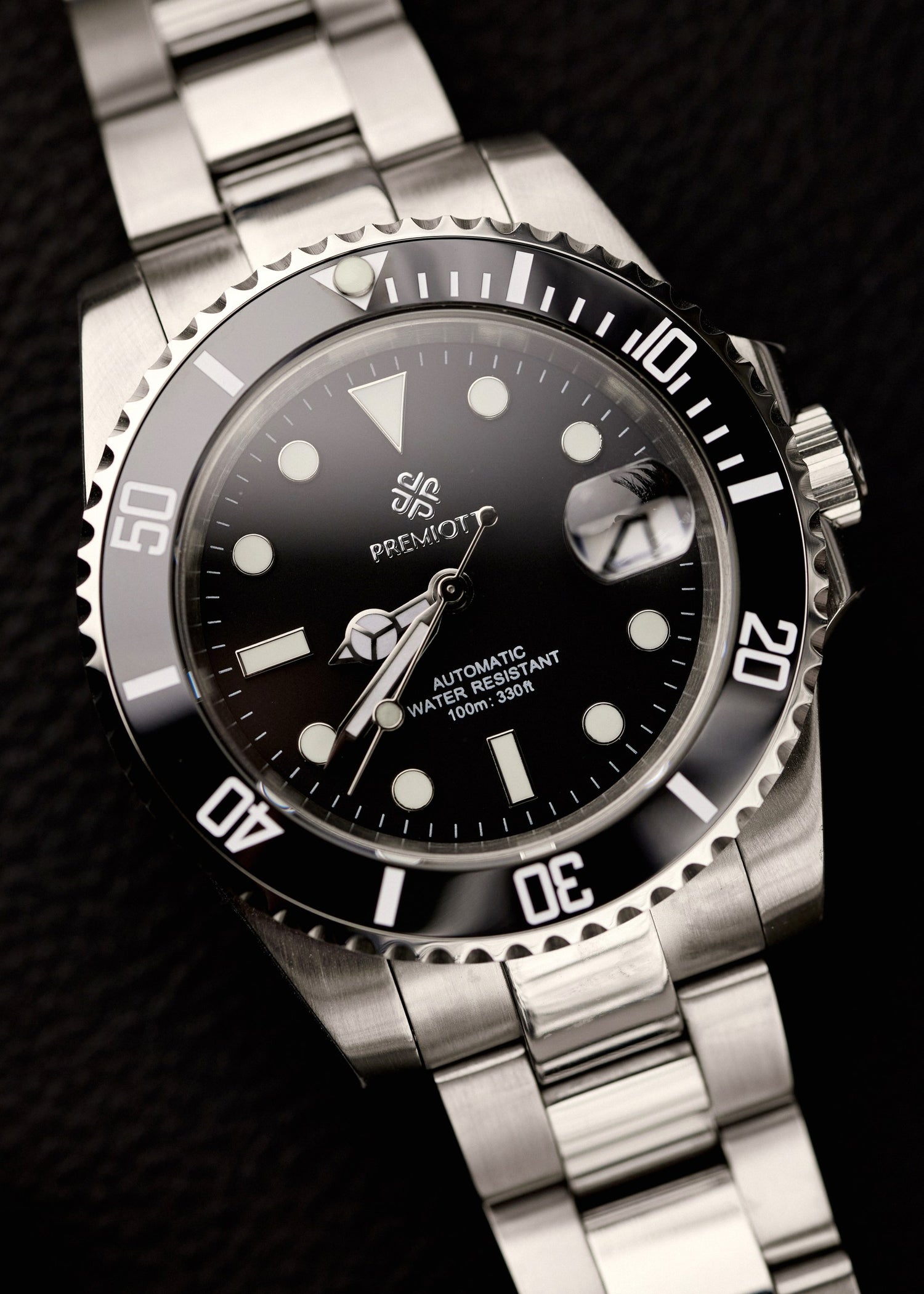
Ca să fie limpede ce înseamnă toate acestea în practică, iată cum arată lucrurile la noi. Premiott este un atelier din Cluj-Napoca care asamblează ceasuri automatice la comandă. Nu producem componentele — carcasele, cadranele și brățările vin de la producători specializați, iar mecanismul este Seiko NH35 — dar fiecare ceas este montat, reglat și verificat aici, bucată cu bucată, pentru configurația pe care o alege clientul. Nu ținem stocuri de ceasuri gata făcute: ceasul tău începe să existe abia după ce l-ai configurat.
Gama actuală acoperă patru siluete clasice:
- The Mariner — 40 mm, stil diver sport, cu safir pe cadran și caseback; alegerea firească pentru purtare zilnică fără menajamente.
- The Just Date — 36 mm, ceasul de ținută prin excelență, cu data la ora 3 și lunetă netedă sau canelată, după preferință.
- The Heritage — 41 mm, sport-elegant cu brățară integrată din oțel și rezistență la apă de 3 ATM, pentru purtare de zi cu zi.
- The LadyJust — 36 mm, varianta pentru ea, cu lunetă cu pietre și aceleași materiale ca restul gamei.
Fiecare model se configurează online — cadran, lunetă, brățară, gravură — și pleacă din atelier cu 24 de luni de garanție.
Întrebări frecvente despre ceasurile românești
Mai există ceasuri fabricate integral în România?
Nu în sensul industrial de altădată. Producția Orex s-a încheiat în anii de după 1989, iar astăzi niciun atelier local nu fabrică toate componentele în țară — ceea ce, de altfel, e valabil pentru aproape orice brand de ceasuri din lume. Ce există în schimb sunt ateliere care asamblează și reglează ceasuri în România, cu componente de la producători consacrați.
Un ceas asamblat în România e mai puțin fiabil decât unul „de fabrică"?
Nu, dacă atelierul folosește componente dovedite și lucrează atent. Fiabilitatea unui ceas stă în primul rând în mecanism — iar un calibru ca Seiko NH35 se comportă la fel indiferent unde a fost montat. Diferența pe care o face un atelier mic este atenția: fiecare ceas e montat și verificat individual, nu pe bandă.
Merită un ceas românesc drept cadou?
E unul dintre cele mai bune motive să alegi unul: povestea locală plus personalizarea fac diferența față de orice ceas „de raft". Un ceas configurat pentru cineva anume — cu cadranul preferat și un mesaj gravat pe capac — spune mai mult decât orice logo cunoscut de pe cadran.
Alege-ți configurația
Dacă vrei să vezi cum arată un ceas asamblat în România în 2026, cel mai simplu e să construiești unul: intră în configurator, alege modelul și compune-l pas cu pas. Iar dacă vrei mai întâi să ne cunoști, povestea completă a atelierului te așteaptă pe pagina atelierului din Cluj-Napoca.