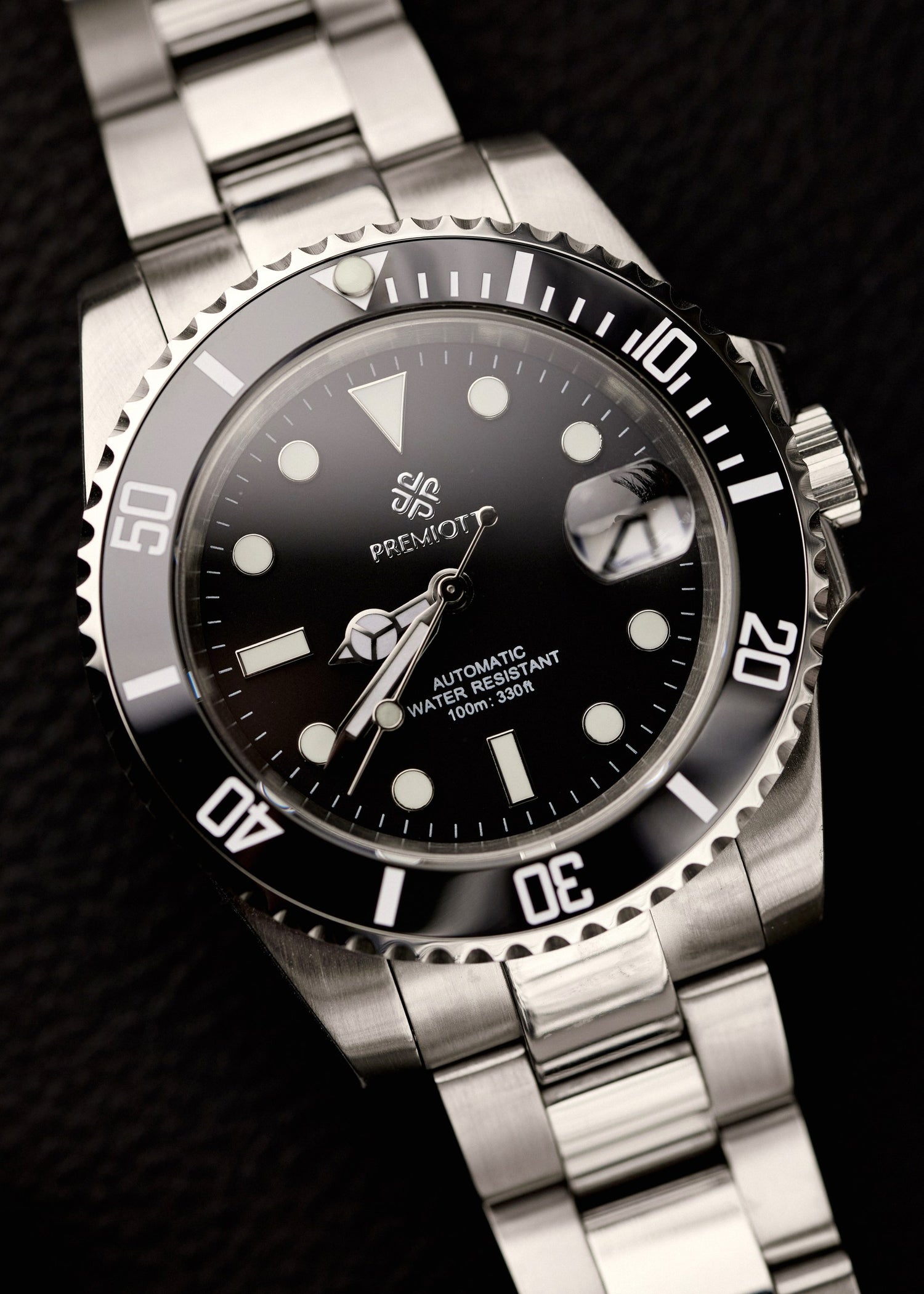

Ce diametru de ceas mi se potrivește
Una dintre cele mai frecvente întrebări înainte de a cumpăra un ceas nu are legătură cu mecanismul sau cu materialele, ci cu ceva mult mai simplu: „ce diametru mi se potrivește?" Răspunsul corect nu este un număr fix, ci o zonă confortabilă, determinată de mărimea încheieturii, de forma carcasei și de stilul pe care îl cauți. Mai jos explicăm cum îți măsori încheietura, ce benzi orientative de diametru funcționează în general și de ce diametrul, deși e primul lucru la care te uiți, nu este singurul care contează.
De ce diametrul contează mai mult decât pare
Diametrul carcasei este cifra pe care o vezi prima în descrierea oricărui ceas, dar el spune doar o parte din poveste. Același diametru poate arăta complet diferit pe două încheieturi diferite, iar același ceas poate „sta" impecabil pe o încheietură și disproporționat pe alta, în funcție de câțiva factori suplimentari: lățimea reală a osului încheieturii, forma carcasei (rotundă, tonneau, pătrată), grosimea ceasului și lățimea curelei. De aceea, cel mai bun punct de plecare nu este o listă rigidă de reguli, ci o măsurătoare simplă, făcută acasă, în două minute.
Cum îți măsori încheietura
Ai nevoie doar de o panglică de croitorie sau, în lipsa ei, de o bucată de ață și un liniar.
- Înfășoară panglica în jurul încheieturii, exact acolo unde va sta ceasul — puțin sub osul încheieturii, nu peste el.
- Strânge ușor, cât să simți panglica lipită de piele, fără să apeși în carne.
- Citește circumferința în centimetri la punctul unde panglica se suprapune.
- Dacă folosești ață, marchează punctul de suprapunere cu degetul, apoi măsoară lungimea rezultată cu un liniar.
Ca reper general: sub 15 cm înseamnă o încheietură subțire, 15-17 cm este intervalul cel mai comun la bărbați și la multe femei, iar peste 18 cm înseamnă o încheietură mai lată, care „duce" bine diametre mai mari. Sunt intervale orientative, nu praguri stricte — două persoane cu aceeași circumferință pot avea oase ale încheieturii vizibil diferite ca formă, ceea ce schimbă percepția finală.
Benzi orientative de diametru
Odată ce știi circumferința, poți folosi următoarele benzi ca punct de plecare — sunt convenții consacrate în orologerie, nu reguli matematice:
- ≈36 mm — potrivit pentru încheieturi subțiri spre medii (sub ~16 cm), pentru cine preferă un profil discret sau pentru un stil clasic, vintage. Este și diametrul cel mai versatil pentru încheieturi de damă.
- 39-41 mm — zona de mijloc, cea mai populară în general, potrivită pentru majoritatea încheieturilor medii (~16-18,5 cm) și pentru un echilibru bun între prezență vizuală și confort.
- 42 mm și peste — pentru încheieturi mai late (peste ~18,5 cm) sau pentru cine preferă un ceas cu prezență vizuală mai puternică, adesea în registrul sportiv.
Aceste benzi sunt un ghid, nu o lege. Preferința personală contează la fel de mult ca cifrele: unele persoane cu încheieturi medii preferă în mod deliberat un ceas mai mic pentru un aer discret, altele preferă unul mai mare pentru senzația de „prezență" pe mână. Dacă ești la limita dintre două benzi, gândește-te mai degrabă la stilul pe care îl cauți decât la milimetrul exact.
Lug-to-lug: dimensiunea des ignorată
Diametrul spune cât de „lat" pare ceasul văzut din față, dar distanța lug-to-lug — de la vârful unei anse (lug) la vârful celei opuse, măsurată pe verticală — este cea care decide dacă ceasul „încape" efectiv pe încheietură. Un ceas cu diametru moderat, dar cu lug-to-lug foarte lung, poate atârna peste marginile încheieturii și poate arăta disproporționat, în timp ce un ceas cu diametru puțin mai mare, dar cu anse scurte și curbate spre interior, poate sta perfect chiar și pe o încheietură mai subțire.
Dacă ai ocazia să încerci un ceas fizic înainte de a decide, uită-te la ansamblul lug-to-lug la fel de atent ca la diametru — mai ales dacă ai o încheietură mai subțire și tot vrei un cadran cu prezență vizuală.
Grosimea carcasei și proporția curelei
Doi factori suplimentari influențează cum „poartă" un ceas anumite diametre:
- Grosimea carcasei — un ceas subțire pare mai discret la același diametru, în timp ce un ceas gros, chiar cu diametru moderat, capătă o prezență vizuală mai puternică și poate ieși mai mult sub manșeta cămășii.
- Lățimea curelei — o curea proporțională cu diametrul carcasei echilibrează vizual întregul ceas. O curea prea îngustă pe o carcasă mare, sau invers, rupe proporția, chiar dacă diametrul în sine este „corect" pentru încheietura ta.
Ceas de zi cu zi vs. ceas sport: convenții diferite
Registrul ceasului influențează și așteptările privind diametrul. Ceasurile de tip dress — clasice, subțiri, gândite pentru costum sau ținută office — tind tradițional spre diametre mai mici și carcase mai subțiri, pentru a aluneca discret sub manșetă. Ceasurile sport sau cu inspirație din lumea instrumentelor de teren/marină tind spre diametre mai generoase și carcase mai robuste, unde prezența vizuală face parte din identitatea modelului. Niciuna dintre convenții nu este obligatorie — sunt tendințe generale, nu reguli — dar ajută să știi în ce registru se încadrează ceasul pe care îl iei în calcul.
Ceasuri de damă și unisex: 36 mm ca alegere versatilă
Piața modernă a renunțat de mult la ideea că diametrele mici sunt „doar pentru femei" și cele mari „doar pentru bărbați". Diametrul de 36 mm s-a impus ca una dintre cele mai versatile alegeri unisex: suficient de prezent cât să nu pară un accesoriu minor, suficient de compact cât să stea bine și pe încheieturi subțiri, indiferent de gen. Este motivul pentru care multe branduri, Premiott inclusiv, folosesc 36 mm atât pentru modele gândite specific pentru femei, cât și pentru cei care preferă, indiferent de gen, un profil mai discret.
Trucul de acasă: decupajul din hârtie
Dacă nu ai acces la ceasul fizic înainte de a comanda, poți simula rapid cum va sta pe încheietură:
- Decupează din hârtie sau carton subțire un cerc cu diametrul exact al carcasei pe care o iei în calcul (de exemplu 36 mm sau 40 mm).
- Așază decupajul pe încheietură, exact în locul unde ar sta ceasul.
- Privește-l din unghiul din care te uiți în mod normal la ceas — de sus, cu brațul relaxat — nu de la distanță.
- Repetă cu 1-2 diametre diferite, ca să compari direct proporția.
Nu simulează grosimea sau lug-to-lug-ul, dar oferă o idee corectă despre cum se va simți diametrul pe încheietura ta, înainte de a decide.
Cum se traduc benzile în modelele Premiott
La Premiott, fiecare model se încadrează clar într-una din benzile de mai sus, ceea ce simplifică alegerea:
- The Just Date, 36 mm — un profil clasic, discret, potrivit pentru încheieturi subțiri spre medii sau pentru cine preferă un ceas cu prezență moderată, indiferent de gen.
- The LadyJust, 36 mm — gândit specific pentru încheieturi de damă, în aceeași zonă versatilă de diametru.
- The Mariner, 40 mm — zona de mijloc, echilibrată, potrivită pentru cele mai multe încheieturi medii, cu un aer ușor sportiv.
- The Heritage, 41 mm — cu brățară integrată, ceea ce înseamnă un lug-to-lug gândit special pentru continuitatea vizuală dintre carcasă și brățară; recomandat pentru încheieturi medii spre mai late.
Toate cele patru modele au sticlă safir pe cadran și caseback, mecanism Seiko NH35 — despre care poți citi mai multe în ghidul automatic vs. quartz — și pot primi o gravură personalizată de până la 10 caractere pe capac. Fiecare ceas se asamblează și se reglează manual în atelierul nostru din Cluj-Napoca și pleacă de la noi cu 24 de luni de garanție.
Dacă vrei să compari direct siluetele și configurațiile disponibile pentru fiecare diametru, cel mai simplu punct de plecare este configuratorul. Iar dacă abia acum iei în calcul primul tău ceas automatic, ghidul cum alegi primul ceas automatic completează contextul, dincolo de diametru.
Întrebări frecvente despre diametrul ceasului
Ce se întâmplă dacă aleg un diametru prea mare pentru încheietura mea?
Cel mai vizibil semn este atunci când ansele (lug-to-lug) depășesc marginile încheieturii — ceasul pare că „atârnă" peste os, în loc să stea aliniat cu forma brațului. Diametrul în sine contează mai puțin decât lug-to-lug-ul în acest scenariu; de aceea recomandăm să verifici ambele dimensiuni, nu doar cifra de diametru.
Pot purta un ceas de 36 mm dacă am o încheietură medie sau mai lată?
Da, este perfect posibil, mai ales dacă preferi un stil clasic sau discret. Benzile orientative descriu ce funcționează pentru majoritatea, nu o regulă obligatorie — un 36 mm pe o încheietură mai lată poate arăta la fel de bine ca unul pe o încheietură subțire, atâta timp cât îți place proporția rezultată.
Diametrul influențează cât de vizibil este cadranul sau data?
Într-o oarecare măsură, da — un cadran mai mare oferă, de regulă, puțin mai mult spațiu pentru indicii și pentru fereastra de dată, deci o lizibilitate ușor mai bună la distanță. Diferența este însă mică între benzile uzuale (36 mm față de 40-41 mm) și rareori decisivă; proporția pe încheietură contează, în practică, mai mult decât câțiva milimetri de lizibilitate suplimentară.