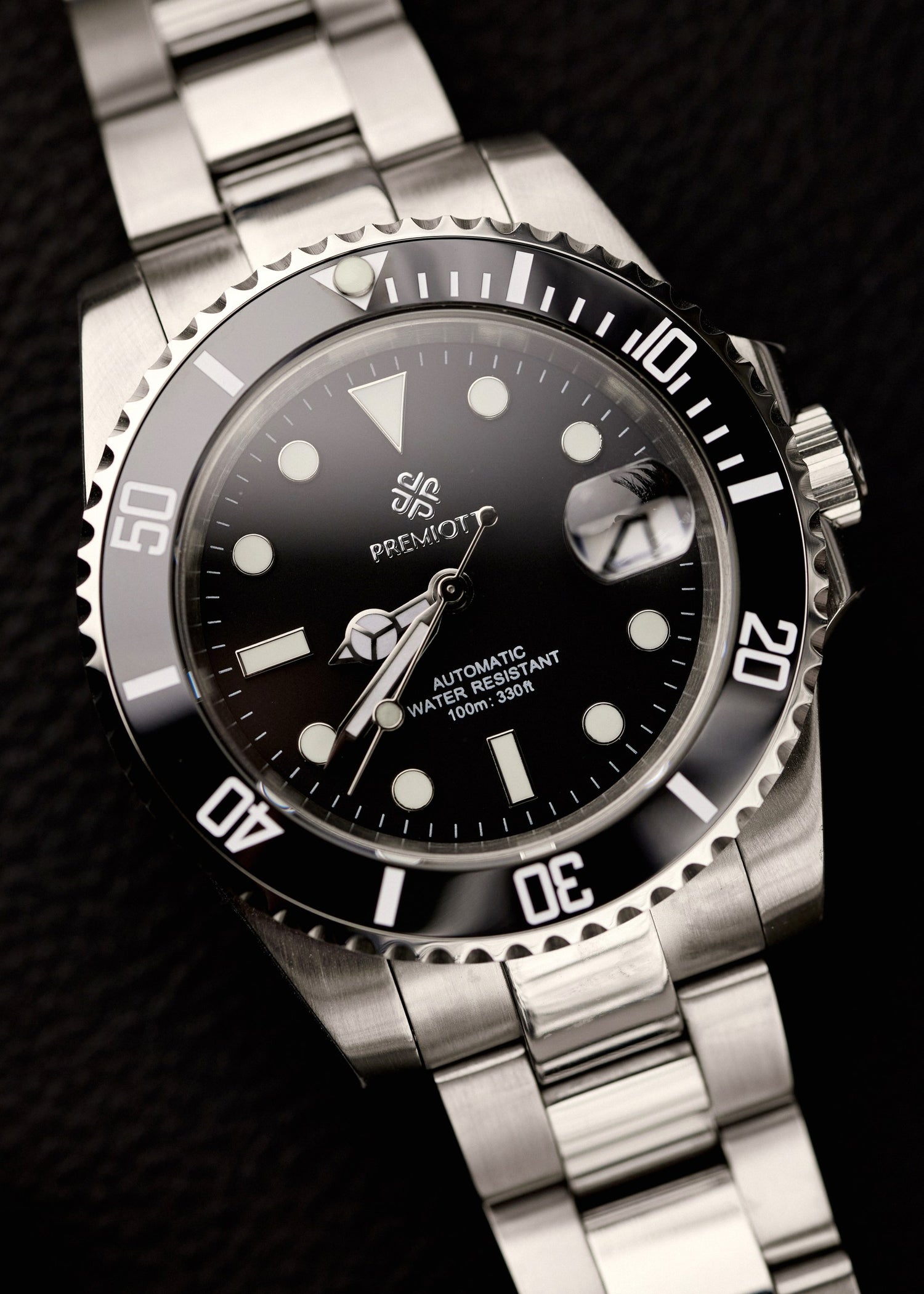

Cum alegi primul ceas automatic
Primul ceas automatic e o decizie diferită de orice alt ceas cumpărat până acum. Nu alegi doar un model care arată bine — alegi și un mic obicei nou: să porți ceva care, spre deosebire de un quartz sau de telefon, are nevoie de mișcarea ta ca să funcționeze. Vestea bună este că nu trebuie să știi nimic despre orologerie ca să alegi bine. Trebuie doar să știi la ce să te aștepți realist și pe ce merită să pui accent la nivel de intrare. Asta explicăm mai jos, fără mituri și fără presiune să cumperi mai mult decât ai nevoie.
Ce înseamnă, de fapt, „automatic"
Un ceas automatic nu are baterie. În interior, o rotoare metalică se mișcă liber la fiecare gest al încheieturii și, prin acest mișcare, încarcă un arc principal — sursa de energie a ceasului. Arcul eliberează energia treptat, printr-un lanț de roți dințate și un mecanism de escapament, care produce mișcarea specifică, ușor „tremurată", a secundarului. E o mașinărie mecanică în miniatură, care trăiește din energia pe care i-o dai purtând-o.
Practic, asta înseamnă un singur lucru important pentru un începător: cât mai porți ceasul, cu atât mai puțin trebuie să te gândești la el. Dacă îl porți zilnic, rotoarea îl încarcă singur, fără niciun gest din partea ta. Explicăm mecanismul pe larg, comparat cu un quartz, în ghidul automatic vs. quartz.
Rezerva de mers: cât „ține" ceasul dacă nu-l porți
Energia acumulată în arc se numește rezervă de mers — timpul cât ceasul continuă să meargă după ce a fost scos de pe mână. La mecanismele din clasa Seiko NH35, folosite pe toate modelele Premiott, rezerva de mers este de aproximativ 41 de ore. Dacă îl scoți vineri seară, îl mai găsești în mișcare sâmbătă la prânz; dacă îl lași pe noptieră două zile lucrătoare, s-ar putea să-l găsești oprit luni dimineață.
Nu e o defecțiune — e comportamentul normal al oricărui automatic. Când se oprește, îl reiei simplu: tragi coroana, îl repornești și îl reglezi la ora curentă folosind funcția de hacking (secundarul se oprește când tragi coroana, ca să poți seta ora exactă la secundă). Dacă știi dinainte că nu-l vei purta o vreme, poți și să-l încarci manual, întorcând coroana câteva zeci de ture, în loc să aștepți să pornească singur prin mișcare — util mai ales după un weekend petrecut pe noptieră.
La ce precizie să te aștepți, realist
Aici merită onestitate de la început: un ceas automatic nu concurează cu un quartz la precizie. Un quartz obișnuit deviază cu câteva secunde pe lună. Un mecanism automatic bun, din clasa NH35, deviază cu câteva secunde pe zi — de regulă undeva între -20 și +40 de secunde, în funcție de poziția în care stă peste noapte, de temperatură și de cât de constant e purtat. E o diferență de ordinul 100:1 în favoarea quartz-ului și e complet normală la acest nivel.
Practic, asta înseamnă că din când în când vei ajusta ora — nu pentru că e stricat ceva, ci pentru că așa funcționează fizica unui arc și a unui escapament. Cine cumpără un automatic cumpără o experiență mecanică, nu un cronometru de laborator; comparăm pe larg cele două filosofii în ghidul automatic vs. quartz.
Ce contează cu adevărat la primul ceas automatic
La nivel de intrare, e ușor să te pierzi în specificații care sună impresionant, dar contează puțin în purtarea zilnică. Câteva lucruri chiar merită atenție:
Un mecanism reparabil, nu neapărat „exotic"
Cel mai important criteriu pentru un prim ceas automatic nu e precizia sau numele mecanismului, ci cât de ușor poate fi service-uit. Un mecanism răspândit, precum Seiko NH35, poate fi verificat și reparat de aproape orice ceasornicar, oriunde, pentru că piesele și expertiza sunt ușor de găsit. Un mecanism rar sau proprietar te poate lega de un singur atelier, ceea ce complică viața pe termen lung, mai ales dacă e primul tău contact cu lumea asta.
Sticlă safir pe cadran
Duritatea materialului de pe cadran contează mai mult decât pare la început, pentru că un ceas purtat zilnic ajunge inevitabil în contact cu chei, brățări, suprafețe de birou. Sticla safir sintetică rezistă la zgârieturi mult mai bine decât sticla minerală sau plexiglasul — explicăm diferențele pe larg, cu duritate pe scara Mohs și tot, în ghidul ce înseamnă sticla safir.
Rezistență la apă, la nivelul de bază
Nu ai nevoie de un ceas de scafandru ca prim automatic, dar merită un minim de protecție — 3 ATM sau echivalent — suficient pentru spălatul mâinilor, ploaie sau stropi accidentali, nu pentru înot sau duș. Dacă vrei mai mult, verifică specificația exactă a modelului înainte să presupui că poate intra în apă.
Mărimea potrivită pe încheietură
Un ceas automatic tinde să fie ceva mai gros decât un quartz subțire, din cauza mecanismului mecanic din interior, așa că diametrul cutiei contează mai mult decât la un ceas obișnuit. Un ceas prea mare pe o încheietură subțire — sau invers — se simte incomod chiar dacă arată bine în poză. Am scris un ghid dedicat exact acestei alegeri, cu repere clare pentru fiecare tip de încheietură, în cum alegi diametrul potrivit.
Pe ce nu merită să plătești în plus, la început
La primul automatic, câteva lucruri sunt mai degrabă „nice to have" decât motive reale să cheltui mai mult:
- Complicații suplimentare (cronograf, GMT, fază lunară) — adaugă complexitate și preț, dar nu contribuie la experiența de bază; le poți explora mai târziu, la al doilea ceas.
- Un nume de brand celebru — la nivel de intrare, numele de pe cadran cântărește mai mult în percepție decât în calitatea mecanică; un mecanism cunoscut și bine întreținut contează mai mult decât logo-ul.
- Precizie „premium" — mecanisme reglate la toleranțe foarte stricte costă mult mai mult, pentru un câștig de câteva secunde pe zi, greu de simțit la un începător.
Bugetul, onest: mecanic de intrare vs. quartz de brand
Merită spus direct: la buget egal, un quartz de la un brand cunoscut poate arăta „mai scump" decât un automatic de intrare — pentru că plătești în bună parte marketing și nume, nu neapărat materiale sau mecanism superior. Un mecanic de intrare, cu mecanism reparabil, sticlă safir și rezistență la apă de bază, oferă adesea mai multă valoare tehnică reală la același preț, chiar dacă numele de pe cadran e mai puțin cunoscut. Nu înseamnă că un quartz de brand e o alegere greșită — înseamnă doar că cele două cumpără lucruri diferite: unul cumpără un nume, celălalt cumpără o mașinărie pe care o poți purta, întreține și repara ani de zile.
Îngrijire de bază, fără complicații
Un automatic nu cere ritualuri speciale, doar câteva obiceiuri simple:
- Poartă-l cât mai des — mișcarea ta e sursa lui de energie; un ceas purtat zilnic rareori se oprește.
- Reglează-l după pauze mai lungi — dacă stă nepurtat câteva zile, se oprește; îl repornești și îl reglezi în câteva secunde, fără nicio unealtă.
- Evită șocuri și temperaturi extreme — un mecanism mecanic tolerează bine purtarea zilnică, dar nu impacturi puternice.
- Programează un service periodic — la câțiva ani, o verificare la un ceasornicar menține mecanismul în stare bună.
De ce merită să-l configurezi chiar tu
Un prim ceas automatic e, pentru mulți, și primul obiect mecanic pe care îl aleg conștient, nu doar îl cumpără dintr-un raft. De aceea contează să-l personalizezi puțin — cadran, curea, eventual o gravură cu un mesaj scurt pe capac — în loc să iei exact configurația standard pe care o are toată lumea. Nu schimbă nimic din partea tehnică explicată mai sus, dar transformă „un ceas automatic" în „primul meu ceas automatic", ales și compus de tine.
La Premiott, toate modelele — The Mariner (40 mm), The Just Date (36 mm), The Heritage (41 mm, cu brățară integrată, rezistență 3 ATM) și The LadyJust (36 mm, model de damă) — pornesc de la mecanismul Seiko NH35, cu sticlă safir pe cadran și pe caseback-ul transparent, și pot primi o gravură personalizată de până la 10 caractere pe capac. Fiecare ceas se asamblează și se reglează manual în atelierul nostru din Cluj-Napoca și pleacă din atelier în 1-7 zile, cu 24 de luni de garanție. Poți vedea toate opțiunile de personalizare pe pagina personalizare sau poți începe direct din configurator, alegând modelul care se potrivește încheieturii și stilului tău.
Concluzie
Primul ceas automatic nu trebuie să fie perfect din toate punctele de vedere — trebuie doar să aibă un mecanism pe care să te poți baza, materiale care rezistă la purtarea zilnică și o mărime potrivită pentru tine. Restul — complicații, branduri, precizie de cronometru — sunt lucruri de explorat mai târziu, dacă și când pasiunea crește. Pentru un început, un mecanism reparabil ca NH35, sticlă safir și o mărime bine aleasă acoperă tot ce contează cu adevărat.
Întrebări frecvente despre primul ceas automatic
Cât timp merge un ceas automatic dacă nu-l port deloc?
Depinde de rezerva de mers a mecanismului. La mecanismele din clasa Seiko NH35, folosite de Premiott, rezerva este de aproximativ 41 de ore de la ultima purtare. După ce se oprește, nu trebuie decât să-l repornești și să-l reglezi la ora curentă — nu suferă nicio deteriorare din faptul că a stat oprit.
Trebuie să știu multe despre ceasuri ca să aleg bine primul automatic?
Nu. Contează mai puțin să cunoști terminologia de nișă și mai mult să alegi un mecanism reparabil, sticlă safir pentru rezistență la zgârieturi și o mărime de cutie potrivită încheieturii tale. Restul se învață purtându-l, nu citind despre el înainte de cumpărare.
De ce e mai puțin precis un automatic decât un ceas cu baterie?
Pentru că măsoară timpul mecanic, printr-un arc și un escapament, nu electronic, printr-un cristal de cuarț care vibrează la o frecvență fixă. Diferența de câteva secunde pe zi, față de câteva secunde pe lună la quartz, e normală și face parte din natura unui mecanism automatic, nu un semn că ceva nu funcționează corect.